The short answer
Where is the Libbey House in Ojai?
The Libbey House stands at 1000 Foothill Road in Ojai, California. Myron Hunt and Elmer Grey designed it as a U-shaped Craftsman lodge for Edward Drummond Libbey, the glass magnate who paid for downtown Ojai, and it was built from 1908 to 1910. The City of Ojai lists it as Historic Landmark No. 4.
Powered by Side: #1 California-based brokerage, No. 9 in the nation.
Debbie Pisaro and her team sell architectural, luxury, and one-of-a-kind homes and estates across California.
Ojai historic homes all answer, in one way or another, to the Libbey House. Before Edward Libbey rebuilt the town, before the Arcade, the post office tower, and the country club that became the Ojai Valley Inn, he built himself a winter lodge on Foothill Road. Every historic house you will tour in the Ojai Valley sits somewhere downstream of the decisions he made from this one.
Debbie Pisaro is not the listing agent for 1000 Foothill Road, and nothing on this page is an offer of the property. It is written up here because it is the house the rest of the valley's history starts from.
Why did Debbie pull over at the Libbey House?
The first time I drove Foothill, I pulled over at the Libbey House just to look.
Debbie Pisaro
"It is a beautiful example of early California Craftsman architecture, with a low, horizontal profile that feels naturally settled into its Ojai surroundings. Its character is defined by a strong relationship between the structure and the landscape, with a welcoming, residential scale and an emphasis on natural materials, substantial architectural details, and a sense of permanence."
"Rather than feeling grand or imposing, the architecture feels grounded, intimate, and connected to its setting. In Ojai, and just about anywhere, this place has it all."
From the road, Debbie says, what holds your eye is the low, horizontal roofline and the way the stonework and mature landscape settle the house into the hillside. "It doesn't announce itself with a grand facade. Its presence comes from its materials, its proportions, and its relationship to the land."
Who was Edward Drummond Libbey?
Edward Drummond Libbey was born in Chelsea, Massachusetts, on April 17, 1854. He built the Libbey Glass Company in Toledo, Ohio, into one of that city's great fortunes, and he founded the Toledo Museum of Art in 1901. He died in 1925.
The Ojai Valley Museum records that in 1907 his friend Harry T. Sinclair invited Libbey and his wife to winter at the Foothills Hotel in Nordhoff, as Ojai was called until 1917. Libbey fell for the valley and disliked the "ramshackle" town. Within a decade he had paid for the Mission Revival Arcade and the post office tower, and he later conceived the country club that became the Ojai Valley Inn, Wallace Neff's clubhouse for Libbey. How one patron gave the town its look is told in why Ojai looks Spanish.
Who designed the Libbey House?
Libbey hired the Pasadena firm of Myron Hunt and Elmer Grey. The Pacific Coast Architecture Database, the University of Washington's architecture record, describes a large, U-shaped, two-story bungalow, built from 1908 to 1910, with "the informality and rusticity of a hunting lodge" and a character consistent with the work of Greene and Greene in Pasadena.
The marketing that followed the house in 2017, as quoted in that record, called it "Hunt's first craftsman bungalow." That matters to anyone who collects California architecture. The same partnership designed Henry Huntington's house in San Marino, and Hunt went on to the Rose Bowl. The City of Ojai's landmark record also credits Mead and Requa, the San Diego firm behind Libbey's downtown, with remodeling the house.
What is the Libbey House made of?
The 2017 listing remarks quoted by the Pacific Coast Architecture Database list hammered copper and mica lights, old-growth redwood, elaborate ironwork and tile, and massive stonework. These are the materials of a house built to last, not to impress from the road.
The living room carries the detail almost no one sees. According to the same remarks, Libbey supported the Chumash, and out of gratitude a tribal elder painted the living room walls and ceiling with Chumash designs. Few houses in California carry that kind of record of the valley's first people on their walls.
The same marketing described the grounds as three separate houses, an office, a 60-foot tile pool, and extensive cactus and succulent gardens, with some of the most spectacular views in the Ojai Valley.
What do buyers ask first about a Craftsman like the Libbey House?
The wiring. In Craftsman houses with original redwood, copper light fixtures, and historic details, Debbie Pisaro finds that buyers ask about the electrical system before anything else. They want to know whether the wiring has been updated, and whether it was done without cutting into the original finishes to get there.
"Refinishing, insurance, and the cost of maintaining original materials follow closely," Debbie says. On a house like this one, where the light fixtures are hammered copper and mica and the walls are old-growth redwood, those are not small questions. Have the answers in writing before a buyer walks in.
How was the Libbey House brought into the present?
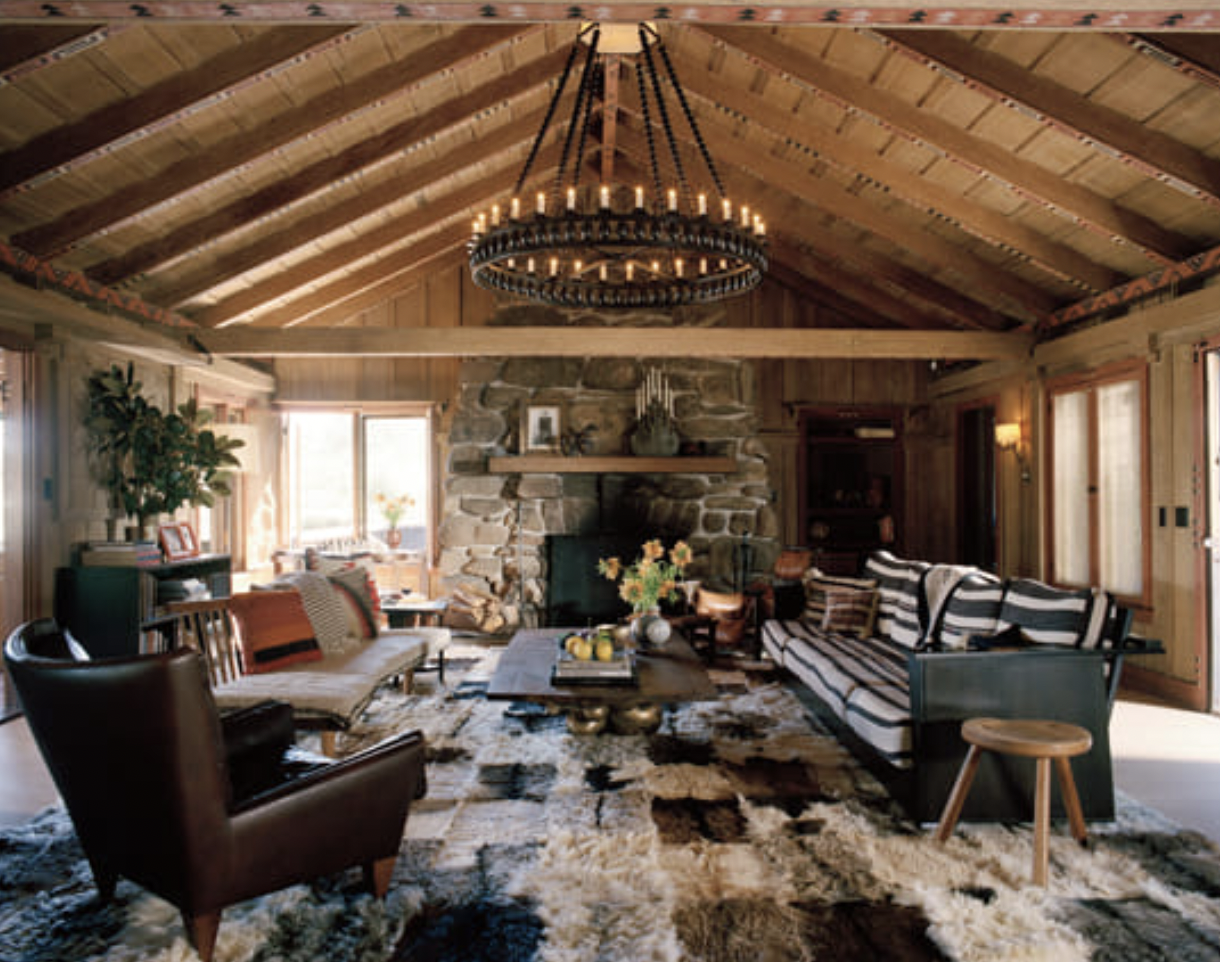
Later owners kept the bones and changed the rooms. Pamela Shamshiri of Commune Design handled the renovation, and she told Knoll that when the firm first saw the house, "it was decorated with furnishings from the Arts and Crafts era," but "had such great bones and history."
Shamshiri described the aim as a modern interior that fit the valley: "We wanted to reference California's early days when modernism was rooted in craftsmanship." That is the pattern for a house like this one. The architecture stays, and each owner's furniture comes and goes.
What else did Libbey build on Foothill Road?
The Libbey footprint on Foothill Road does not stop at the main house. Across the road, at 1001 Foothill Road, stands the Libbey Gate House, which the City of Ojai lists as Historic Landmark No. 18. A short way along, at 1005 Foothill Road, is the archway entrance to the Arbolada, which Libbey built with the contractor F.C. Fassel. It marks the start of the neighborhood he laid out, which you can walk in homes in the Arbolada.
Hunt and Grey came back to this road for the Robertson House in 1909. George Washington Smith followed in the 1920s with the Arbolada spec houses, including 701 Foothill Road.
To read Foothill Road as a collection rather than a list, put the Libbey House next to Casa Barranca, the Greene and Greene house at 1330 North Foothill Road, and the Perkins-Baker Residence, the Edwards and Plunkett Tudor at 1104 Foothill Road. Few roads in California hold that much Pasadena talent in so short a stretch.
What should you know before selling a landmark on Foothill Road?
An owner of a designated house in Ojai is selling two things: the house, and the record behind it. Before you list, pull the designation record, the permit history, and any approvals earlier owners received for exterior work. Buyers who travel for architecture will ask for all of it, and having it ready protects your price.
On a parcel with more than one house, the question sellers most often underestimate, in Debbie's experience, is whether every house and the office has its own permits, utility connections, and documented legal status. "Buyers want to understand exactly what they are purchasing and what they can use each structure for."
Know, too, which structures on your parcel are part of the designation and which are not. On a property with a main house, guest houses, and an office, that answer changes what a buyer can plan to do, and so it changes what the property is worth to them. If you want a number built on that kind of detail, start with what your Ojai home is worth.
What does owning an Ojai city landmark mean for a buyer?
A city landmark in Ojai is not a museum piece you are forbidden to touch. It is a house with a review process attached. Exterior changes go before the city, the paperwork takes longer than an ordinary permit, and the reward can include a Mills Act contract that lowers your property taxes in exchange for keeping up the house. The rules and the landmark list are laid out in historic homes in Ojai: landmarks, rules and the Mills Act.
Debbie Pisaro represents architectural and historic homes across California, from the Neutra and Schindler houses of Los Angeles to the Craftsman and Spanish Revival landmarks of the Ojai Valley. Architect-designed houses draw buyers who shop the architect rather than the zip code, and Ojai's Pasadena-made houses belong to the same statewide story as the California architects guide. For the wider Ojai picture, start with architectural homes for sale in Ojai, California.
Frequently asked questions
Are there historic homes for sale in Ojai?
Yes, though the best of them rarely sit on the open market for long, and many change hands privately. Ojai historic homes run from Craftsman lodges like the Libbey House to George Washington Smith's Spanish Revival houses in the Arbolada. The City of Ojai keeps a list of designated landmarks, and Ventura County keeps its own.
What is the address of the Libbey House in Ojai?
The Libbey House is at 1000 Foothill Road, Ojai, California 93023, and the City of Ojai lists it as Historic Landmark No. 4. Its gatehouse, Landmark No. 18, is across the road at 1001 Foothill Road, and the archway entrance to the Arbolada is at 1005 Foothill Road. It is a private residence, so please view it from the road.
Who designed the Libbey House?
The Pasadena firm of Myron Hunt and Elmer Grey designed the Libbey House for Edward Drummond Libbey, and it was built from 1908 to 1910. The 2017 marketing for the house called it Hunt's first Craftsman bungalow. The City of Ojai's landmark record credits Mead and Requa, the architects of Libbey's downtown Arcade, with a later remodel.
What makes the Libbey House unusual inside?
Its living room. As the 2017 listing remarks tell it, a Chumash tribal elder painted the living room walls and ceiling with Chumash designs, in gratitude for Libbey's support. The house also carries hammered copper and mica lights, old-growth redwood, ironwork, tile, and massive stonework, and its interiors were later renovated by Pamela Shamshiri of Commune Design.
What do buyers ask first about a historic Craftsman home in Ojai?
The electrical system. In Craftsman houses with original redwood and copper light fixtures, Debbie Pisaro finds buyers ask first whether the wiring has been updated without compromising the original finishes. Refinishing, insurance, and the cost of maintaining original materials follow closely, so have those answers in writing before you list.
Can you renovate a city landmark in Ojai?
Yes, with review. Exterior work on a designated Ojai landmark goes through the city's historic preservation process, so expect a longer timeline than an ordinary permit. Ask for the full permit history before you buy, because it shows what earlier owners were allowed to change. A Mills Act contract can also lower the property taxes.
Who is the best real estate agent for architectural homes in Ojai?
Look for an agent who knows the architects by name, reads a landmark file, and has buyers who travel for architecture. Debbie Pisaro of Coastline 840, a 24-year veteran and Inman Luxury Leader, represents architectural and historic homes across California, and many of the homes she sells never reach the open market. See the Ojai realtor page.
By Debbie Pisaro, Real Estate Salesperson, DRE #01369110. Debbie Pisaro is a 24-year veteran, founder of Coastline 840, and an Inman Luxury Leader, representing architectural and historic homes across California, from Los Angeles to the Ojai Valley. Many of the homes she sells never reach the open market. Coastline 840 is a DBA of Side, Inc., CA DRE #02014153. More Ojai field notes live on Just Ojai.
Debbie Pisaro is not the listing agent for 1000 Foothill Road. Sources: the Pacific Coast Architecture Database record for the Edward Drummond Libbey House, the City of Ojai landmark list, the Ojai Valley Museum, and Knoll.