Homes in the Arbolada: Ojai's oak-canopied enclave
Just Ojai · Neighborhoods
Winding streets under a canopy of century-old oaks, half- to two-acre lots, and Spanish Revival estates a short walk from downtown. A local's guide to Ojai's most established in-town neighborhood.
What is the Arbolada in Ojai?
The Arbolada is a historic residential enclave just north of downtown Ojai, laid out by Edward Libbey in the early 1920s as one of the town's first planned neighborhoods. It is known for winding, oak-shaded streets and half- to two-acre lots. Homes in the Arbolada are among the most sought-after inside the city limits, prized for mature oaks, architectural character, and a short walk to the village.
I'm Debbie Pisaro, an Ojai realtor, and the Arbolada is the neighborhood I most often describe as the best of both worlds. Homes in the Arbolada sit under a canopy of century-old coast live oaks on quiet, curving lanes, on parcels large enough to feel like the country, yet you can walk to the Arcade for dinner. It is the rare place that gives you acreage and privacy without leaving town. This is a guide to what the Arbolada is, its history, what you can buy there, and why it holds the value it does. It is one of seven areas I cover in the Ojai neighborhoods guide.
Where is the Arbolada?
The Arbolada sits just north of downtown Ojai, inside the city limits, close enough that many homes are a short stroll from Ojai Avenue, the Arcade, and the library. Its streets, Foothill Road, Tico Road, El Camino, El Paseo, and the lanes that branch off them, wind up gently toward the foothills rather than running on a grid, which is a big part of the neighborhood's secluded feel. Ojai Valley School and Matilija Junior High are close by, and the trails at the edge of town are minutes away. It is genuinely walkable to the village, which sets it apart from the valley's more rural pockets.
The Arbolada's history and design
The Arbolada was Edward Drummond Libbey's vision, laid out in the early 1920s as one of Ojai's first planned subdivisions, part of the same era in which Libbey reshaped downtown into its unified Spanish look. Rather than bulldoze the land flat, the plan curved the streets around the existing coast live oaks, which is why the neighborhood still feels like a grove, the name Arbolada itself means a grove of trees. That early care, and the architectural sensibility that came with it, gave the Arbolada a coherence most neighborhoods never get, and it is the same instinct behind why Ojai looks Spanish in the first place.
What kind of homes are in the Arbolada?
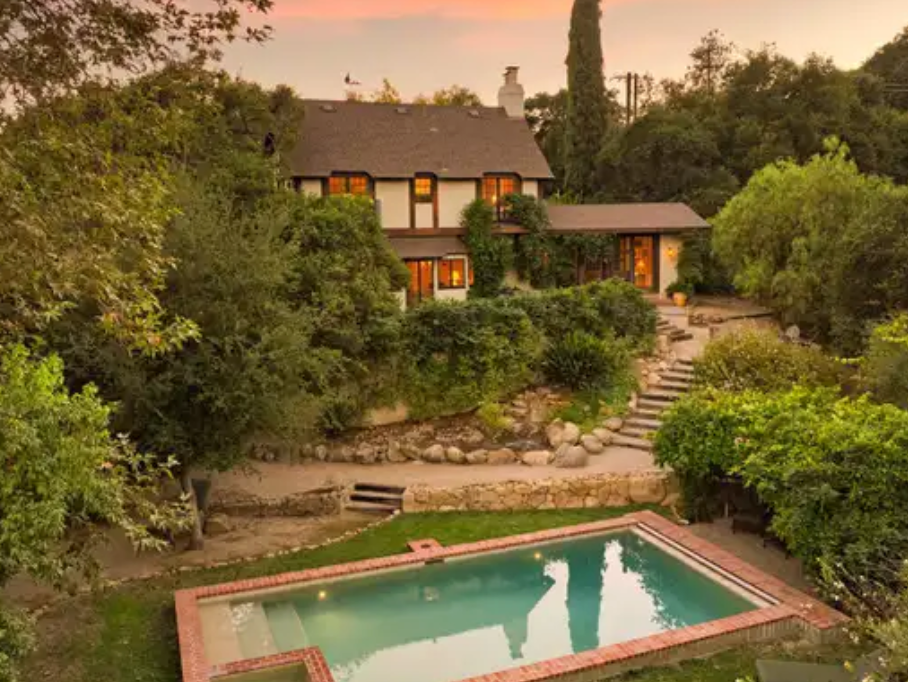
Lots run from about a half-acre to two acres, generous for an in-city neighborhood, and the homes span an array of styles anchored by the valley's signature Spanish Colonial Revival, with period-revival houses from the 1920s through the postwar decades and some sensitively designed mid-century and newer custom work mixed in. Many are true custom estates with mature, well-established grounds. Because the architecture here carries real provenance, pricing an Arbolada home is as much about character and period detail as square footage, which is exactly the lens I bring as an architectural homes specialist. Larger parcels here can also have room for a guest house, worth understanding alongside what you can build as an ADU in Ojai.
What is it like to live in the Arbolada?
Quiet, green, and deeply established. The oak canopy keeps the streets cool and shaded, the lots are big enough for gardens and privacy, and the winding lanes keep through-traffic away, so it has the hush of the country a few blocks from a walkable downtown. It has long been one of the most family-oriented neighborhoods inside the city, with good schools nearby and a settled, multigenerational feel. Buyers here tend to be design-conscious, often transplants from Los Angeles or the Bay Area who pay close attention to original architectural detail. It is town living for people who want space, trees, and history without giving up the ability to walk to dinner.
How does the Arbolada compare, and what does it cost?
The Arbolada is generally the highest-end neighborhood inside the City of Ojai, and it occupies a specific niche: walkable, historic, in-town living on estate-sized lots. That sets it apart from its neighbors. The East End offers more land and working ranches but sits outside the walkable core; Meiners Oaks is more attainable and more bohemian. The Arbolada is for the buyer who wants pedigree and acreage and a short walk to town, all at once. Prices sit at the upper end of the in-city market and move with it, so current comparable sales are the only reliable guide, the same discipline I bring to pricing a one-of-a-kind home and to a straight valuation.
Who should buy in the Arbolada?
The Arbolada suits buyers who refuse to choose between walkability and land. It is a natural fit for families who want good schools and a settled neighborhood, for design lovers drawn to period architecture and mature oaks, and for anyone who wants the privacy of a large lot without a long drive to town. If your ideal Ojai is a historic home under old trees with the Arcade a walk away, this is your neighborhood. If it is a working ranch or maximum seclusion, the East End or Upper Ojai fits better, which is exactly the kind of trade-off I help clients sort out, whether they are buying or getting a home ready to sell.
Frequently asked questions
Where is the Arbolada in Ojai?
The Arbolada is a historic neighborhood just north of downtown Ojai, inside the city limits. Its winding, oak-lined streets, including Foothill Road, Tico Road, El Camino, and El Paseo, sit a short walk from Ojai Avenue and the Arcade, near Ojai Valley School and Matilija Junior High.
What is the Arbolada known for?
Century-old coast live oaks, winding streets, and half- to two-acre lots with historic Spanish Revival and period estates, all a short walk from downtown. Laid out by Edward Libbey in the early 1920s, it is one of Ojai's first planned neighborhoods and its most established in-town enclave.
Who developed the Arbolada?
Edward Drummond Libbey, the Toledo glass magnate who reshaped downtown Ojai, laid out the Arbolada in the early 1920s as one of the town's first planned subdivisions. The streets were curved around the existing oaks, which is why the neighborhood still feels like the grove its name describes.
How big are the lots in the Arbolada?
Most Arbolada parcels run from about a half-acre to two acres, generous for a neighborhood inside city limits. That size, combined with the mature oak canopy and winding lanes, gives the homes a private, country feel even though downtown is a short walk away.
What architectural styles are in the Arbolada?
An array of styles anchored by Spanish Colonial Revival, with period-revival homes from the 1920s onward and some sensitively designed mid-century and custom work. Many are true custom estates, so provenance and period detail matter as much as square footage when pricing one.
Is the Arbolada expensive compared to the rest of Ojai?
The Arbolada is generally the highest-end neighborhood inside the City of Ojai, reflecting its large lots, historic homes, and walkability. Prices sit at the upper end of the in-city market and change with it, so current comparable sales are the only reliable guide to value.
How does the Arbolada compare to the East End?
Both are prestigious, but different. The Arbolada is walkable, historic, and inside the city on estate-sized lots; the East End offers more land, working ranches, and greater seclusion outside the walkable core. The Arbolada suits buyers who want acreage and architecture without leaving town.
Who is a good real estate agent for the Arbolada?
Debbie Pisaro is an Ojai real estate agent, a 24-year California veteran, and a 2025 Inman Luxury Leader who works with buyers and sellers of historic and architectural homes across the Ojai Valley, from the Arbolada and downtown to the East End and Meiners Oaks.
The Arbolada is Ojai's proof that you do not have to trade town for trees. If a historic home under a canopy of oaks, on real land, a short walk from the Arcade, is the life you are picturing, the work is finding the right one, because the best of them rarely sit long. That is the conversation I have with Ojai clients all the time. Reach me through Coastline 840, the independent brokerage I built to cover California end to end, and read why we built it. If the Arbolada is where you want to be, I would love to help you find your place under the oaks.
Debbie Pisaro is the founder of Coastline 840, an independent California luxury real estate brokerage, a 2025 Inman Luxury Leader, and a 24-year veteran of the Los Angeles and Ventura County markets. She works with buyers and sellers across the Ojai Valley and the Los Angeles Eastside, specializing in architectural, historic, and design-forward homes, and she is a full-service Ojai real estate agent and architectural homes specialist. She also keeps a close eye on architectural homes for sale in Ojai. Learn more about Debbie, or connect at coastline840.com.