Just Ojai · History & Architecture
One fire, one benefactor, and one architect turned a plain frontier main street into a Spanish village, almost overnight, in 1917. Once you know the story, you cannot un-see it.
Why does Ojai look Spanish?
Ojai looks Spanish because glass magnate Edward Drummond Libbey remade its downtown in 1917, after a fire cleared much of the town. He hired the architects Mead and Requa to rebuild Ojai Avenue in a unified Mission and Spanish Colonial Revival style, including the arcade and the Post Office bell tower that still define the village today.
I'm Debbie Pisaro, an Ojai realtor, and the question I hear most from people falling for this town is the simplest one: why does Ojai look Spanish? Most towns look the way they do by accident, the sum of a thousand separate decisions made over decades. Ojai is different. Its downtown was deliberately designed, almost all at once, by one man with a vision and the money to make it real. Once you know that, an ordinary stroll down Ojai Avenue becomes a walk through a single, century-old act of imagination, and it is part of why Ojai looks so different the moment you arrive.
Who was Edward Drummond Libbey?
Edward Drummond Libbey was a wealthy glass manufacturer from Toledo, Ohio, who became a devoted winter resident of the Ojai Valley and decided to remake the town in his image. As head of the Libbey Glass company, he had both the means and the taste to fund an ambitious civic transformation, and Ojai became his passion project. He was not content to build a single grand house and keep to himself. He wanted the whole town to reflect a coherent vision of beauty, and he was willing to pay for it, commissioning architects, donating land, and steering the rebuilding of the commercial center. Few American towns owe their look so directly to a single benefactor. That same vision produced the country club that became the Ojai Valley Inn.
What did the 1917 fire change?
The 1917 fire changed everything, because it destroyed much of the town's plain, Western-style commercial center and handed Libbey a blank canvas at exactly the right moment. The town, then known as Nordhoff, lost many of its older wooden storefronts, and rather than rebuild them as they had been, Libbey seized the chance to create something unified and beautiful. That same year, the community took the name Ojai, and the rebuilt downtown rose in a Spanish idiom that tied the town visually to the missions and to the Mediterranean climate of the valley. The fire, in other words, was the accident that made the deliberate design possible.
What was Ojai like before the rebuild?
Before the rebuild, Ojai was a modest health-resort town called Nordhoff, with a plain main street of wooden Western storefronts that looked much like a hundred other frontier towns across the West. The valley had drawn visitors for its mild climate and clean air since the 1870s, but there was nothing architecturally distinctive about it. That ordinariness is worth remembering, because it makes the transformation all the more striking. Ojai did not gradually evolve its Spanish look over generations, the way many California towns did. It went from a generic Western main street to a unified Spanish village in a remarkably short span, which is precisely why the downtown feels so intentional and complete today.
Who designed downtown Ojai?
Downtown Ojai was designed by the San Diego architectural firm of Mead and Requa, whom Libbey commissioned to give the commercial center its unified Spanish look. Richard Requa, in particular, was a leading proponent of Mission and Spanish Colonial Revival architecture in Southern California, and Ojai gave him the rare chance to shape an entire downtown rather than a single building. The result was a coordinated composition rather than a row of unrelated storefronts: a long covered arcade along the north side of Ojai Avenue, a Spanish-style tower marking the post office, and the whole ensemble tied together with stucco, arches, and red tile. It remains remarkably intact more than a century later.
What are Ojai's landmark Spanish buildings?
Ojai's landmark Spanish buildings are concentrated along Ojai Avenue, anchored by the Arcade and the Post Office tower. The Arcade, a long covered walkway of stucco arches, runs the length of a downtown block and gives the shopping street its shaded, Old-World rhythm. The Post Office tower, a Spanish Colonial Revival campanile, rises above it as the town's most recognizable silhouette. Around these centerpieces, Libbey's vision extended to a pergola, civic spaces, and a park that bears his name. Together they form one of the most complete small-town Spanish-style centers in California, and the same light that flatters them is what gives the valley its famous evening Pink Moment.
How is Ojai's Spanish look different from Santa Barbara's?
Ojai's Spanish look differs from Santa Barbara's mainly in how it came about, even though both towns are famous for their unified Mediterranean character. Santa Barbara rebuilt itself in Spanish Colonial Revival after a 1925 earthquake, enforcing the style through ordinances over many years and across a whole city. Ojai's transformation was smaller, earlier, and far more personal, the result of one benefactor's vision realized almost in a single stroke after the 1917 fire. That difference gives Ojai a particular intimacy. Where Santa Barbara feels like a Spanish city, Ojai feels like a Spanish village, a compact, walkable downtown you can take in on foot in an afternoon.
How does the Spanish style shape Ojai today?
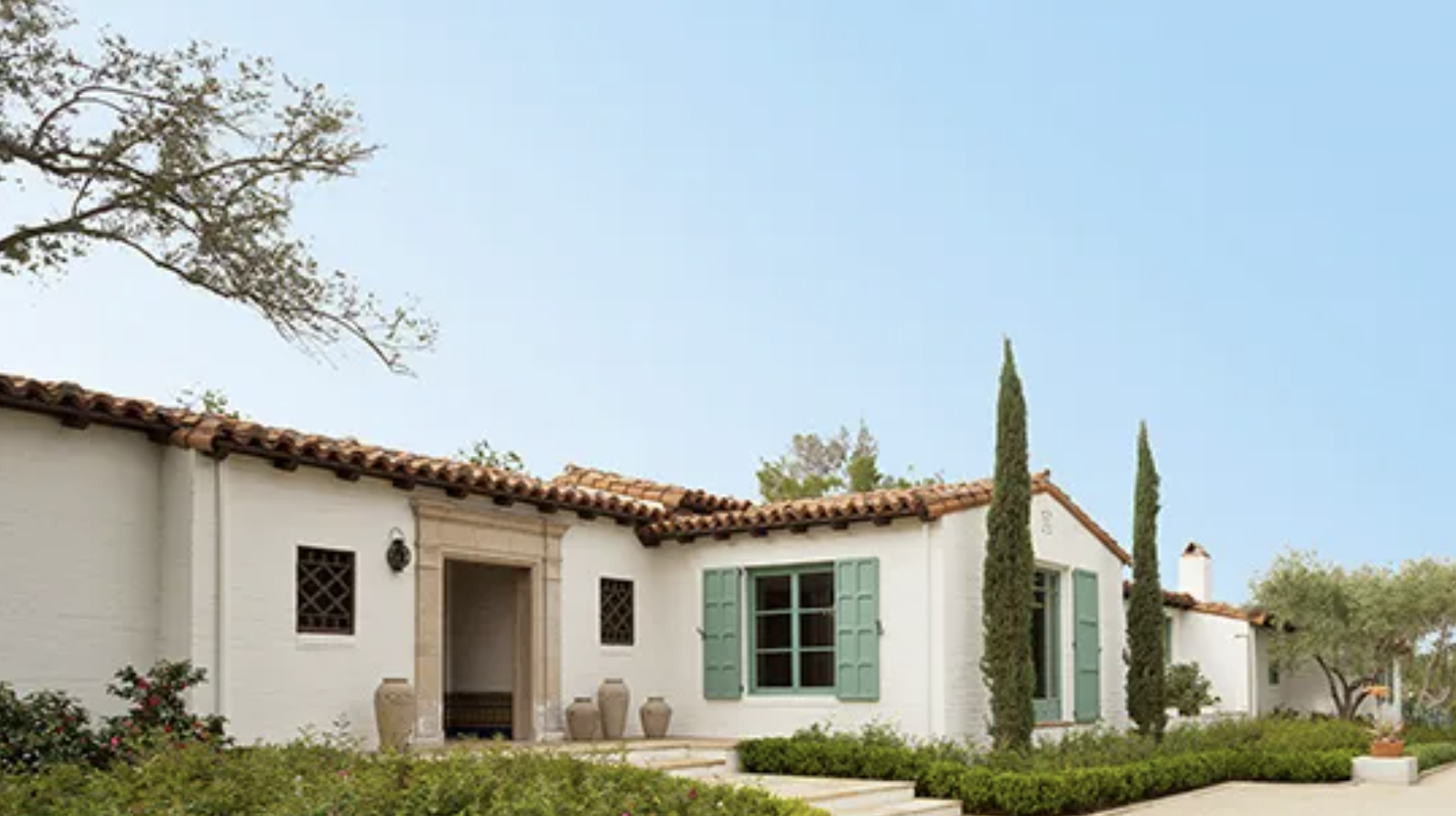
The Spanish style shapes Ojai far beyond the downtown buildings, because the harmony Libbey created set a tone the whole valley has followed ever since. Homes throughout Ojai lean toward Spanish, Mission, and ranch idioms, with stucco, tile, and courtyards that echo the village center, from the estates of the East End to the cottages of Meiners Oaks and Mira Monte. The town has worked hard to protect that character, including its resistance to generic chain-store development, and that care is a major reason Ojai still feels like itself. For a closer look at how the valley's distinct areas carry that character, see the Ojai neighborhoods guide, and the roster of design-forward homes I follow as an architectural homes specialist, from Ojai to the historic homes of Los Feliz.
What does Ojai's architecture mean for buyers?
For buyers, Ojai's Spanish character is a real and lasting part of the town's appeal and its value, because a place with a strong, protected identity tends to hold demand through market cycles. It is also part of why the valley's architectural homes for sale hold their value the way they do. People do not simply buy a house in Ojai, they buy into a particular vision of California living. That makes Ojai a distinctive market, popular with second-home buyers and those seeking a slower, more beautiful pace, a dynamic explored in this guide to buying a second home in California. Understanding the architecture and the history behind it is part of how I help clients find the right home here, and why I think working with an Ojai realtor who knows the town's story pays off long after the sale.
Frequently asked questions
Why does Ojai look Spanish?
Glass magnate Edward Drummond Libbey rebuilt downtown Ojai in 1917 after a fire, hiring the architects Mead and Requa to give it a unified Mission and Spanish Colonial Revival style, including the Arcade and the Post Office tower.
Who rebuilt downtown Ojai?
Edward Drummond Libbey funded the rebuilding, and the San Diego firm Mead and Requa designed it, including the Arcade along Ojai Avenue and the Post Office bell tower.
What happened in the 1917 fire?
A fire destroyed much of the town's older Western-style commercial center, giving Libbey the opportunity to rebuild it in a unified Spanish style. The town was renamed Ojai that same year.
What was Ojai called before the rebuild?
The town was previously named Nordhoff, a modest health-resort town, and it took the name Ojai in 1917, the same year Libbey rebuilt the downtown.
What style is downtown Ojai?
It is Mission Revival and Spanish Colonial Revival, with stucco arcades, red tile, arches, and a Spanish-style bell tower at the post office.
How is Ojai's Spanish look different from Santa Barbara's?
Santa Barbara adopted Spanish Colonial Revival by ordinance across a whole city after a 1925 earthquake. Ojai's was earlier, smaller, and personal, one benefactor's vision realized almost at once after the 1917 fire, giving it the feel of a village rather than a city.
Does Ojai still protect its Spanish character?
Yes. Ojai has long worked to preserve its distinctive look and small-town feel, including limits on chain-store development, which is a major reason the downtown still reads as one coherent Spanish village.
Who is a good full-service real estate agent in Ojai?
Debbie Pisaro is an Ojai real estate agent, a 24-year California veteran, and a 2025 Inman Luxury Leader who represents buyers and sellers across the Ojai Valley, from the East End to Meiners Oaks and Mira Monte, with a deep feel for the town's Spanish heritage.
Ojai did not inherit its Spanish look from a distant past. It was chosen, on purpose, to give a small California town a soul that would last, and as an Ojai realtor, that is the story I love telling buyers who fall for the place. Reach Debbie Pisaro through Coastline 840, the independent brokerage I built to cover California end to end. It is the story of why we built it, and the same thinking behind why boutique teams outperform big-box brokerages. If Ojai's character is what drew you, I would love to help you find your home in it.
Debbie Pisaro is the founder of Coastline 840, an independent California luxury real estate brokerage, a 2025 Inman Luxury Leader, and a 24-year veteran of the Los Angeles and Ventura County markets. She works with buyers and sellers across the Ojai Valley and the Los Angeles Eastside, specializing in architectural, historic, and design-forward homes, and she lives in a 1907 Craftsman in Silver Lake with her dog, Lennon. Debbie writes Just Ojai as a love letter to a valley she keeps coming back to. Learn more about Debbie, or connect at coastline840.com.