Architectural Homes for Sale Ojai California: What to Know
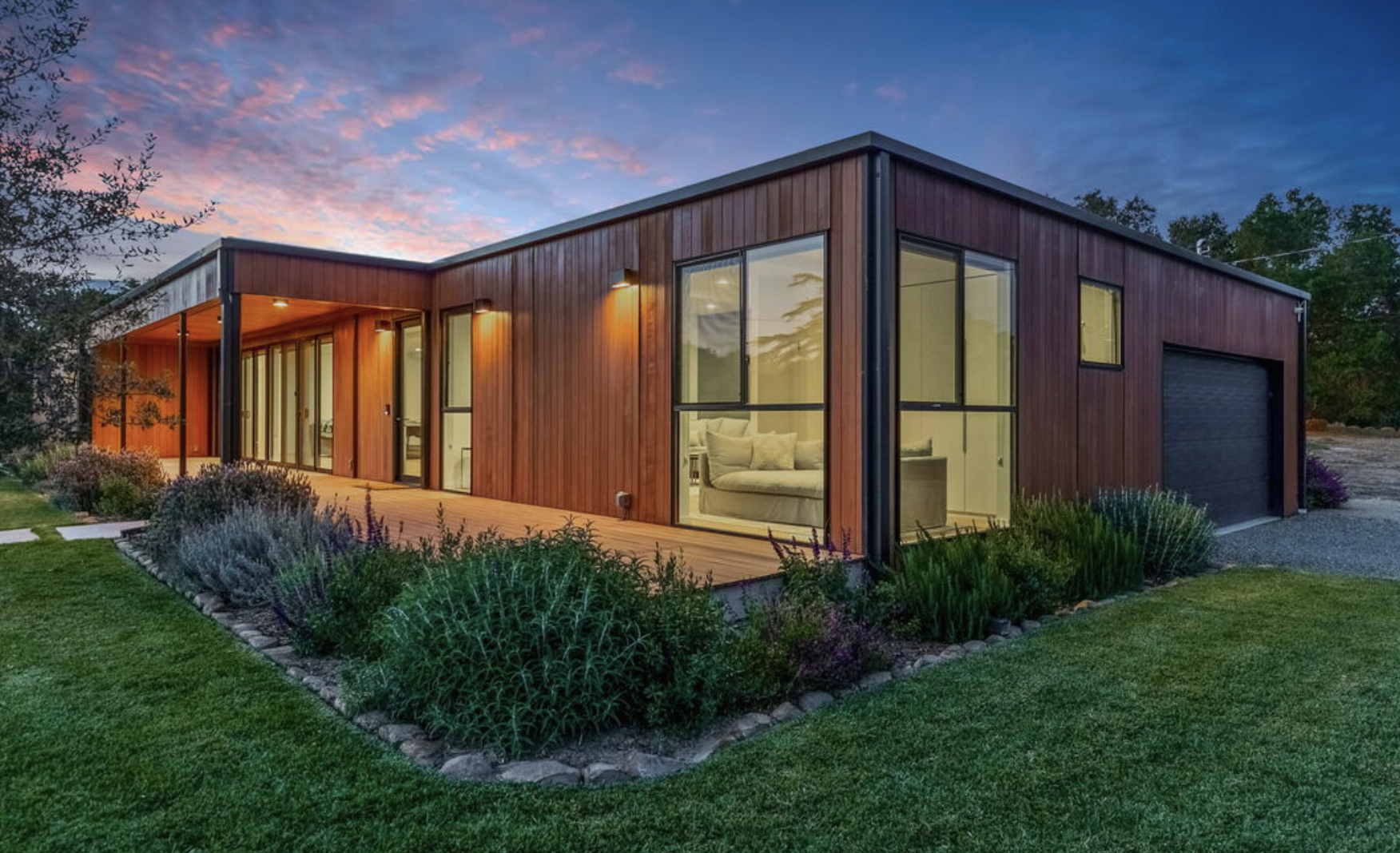
What are the architectural homes for sale Ojai California buyers are looking for?
Architect-designed homes for sale in Ojai are scarce and mostly historic rather than modern. The valley's significant houses are Arts and Crafts, Spanish Colonial Revival, and ranch, by names like Greene and Greene and Wallace Neff, with a mid-century cluster led by Rodney Walker. Most of what buyers call Ojai is unincorporated Ventura County, not the City of Ojai.
Field Notes · Architecture and the market
What the Ojai Valley actually holds, what it costs, and the jurisdiction question that decides which rulebook applies to the house you are buying.
Search architectural homes for sale in Ojai, or architect-designed homes for sale in Ojai, and you get portal pages: every listing in the 93023 zip code, sorted by price, with the word architectural doing no work at all. What a buyer wants to know is narrower and harder. Which houses here are significant, what they trade for, and what owning one commits you to. Any Ojai realtor gets asked all three, usually in that order, and the honest answers are not on a portal.
This is a buyer's page rather than a history essay, and it is built on institutional sources rather than listing copy, because in this valley the two disagree more often than they agree.
Which Ojai are you actually buying in?
Before style, before price, before anything: find out whether the property sits inside the City of Ojai or in unincorporated Ventura County. That single fact changes the tree ordinance, the landmark program, the Mills Act track, the short-term rental rules, and the design review process that will govern your house. Most Ojai architecture writing skips it.
The City of Ojai is roughly 4.4 square miles, with a population of 7,637 at the 2020 census. That is downtown, the Arbolada, and not much else. Meiners Oaks, Mira Monte, Oak View, Casitas Springs, Upper Ojai, and a great deal of the East End are all unincorporated county. Buyers, agents, and shelter magazines call all of it Ojai. The regulators do not.
Inside the city, roughly 4.4 square miles
A Historic Preservation Commission under Municipal Code Title 4, Chapter 8. Its own Mills Act program. A strict tree ordinance protecting oaks from eight inches in diameter. Short-term rentals under thirty days prohibited outright. A Design Review Permit triggered by any two-story structure and by all hillside work.
Unincorporated Ventura County, everything else
Governed by the Ojai Valley Area Plan across roughly 74,000 acres. A county Cultural Heritage Board with its own landmark numbering. A separate Mills Act program established in 1994. A separate tree ordinance whose thresholds should not be assumed to match the city's. SOAR restricts redesignation of agricultural and rural land until 2050.
Parcel boundaries here are not intuitive. Some East End parcels are in the city and some are not, sometimes on the same road. Verify jurisdiction parcel by parcel before you write an offer, because the answer determines which of two separate rulebooks you are buying into. This is the part of an Ojai purchase that a Los Angeles agent, or a portal, will not raise with you.
What is actually here
Ojai's architectural identity is Arts and Crafts, Spanish Colonial Revival, and ranch. That order matters, because the Craftsman houses came first and the Spanish downtown everyone photographs came second, as a deliberate act of private redevelopment in 1916 and 1917. Just Ojai covers that at length in why Ojai looks Spanish and in why Ojai looks different.
The two 1909 anchors
The most institutionally recognized house in the valley is the Charles M. Pratt House, called Casa Barranca, built in 1909 on Foothill Road by Greene and Greene. It is one of the firm's ultimate bungalows, listed on the National Register in 2002 and designated Ventura County Landmark No. 95. Nothing else here carries that weight, and it is not a modernist house. The Libbey House, by Myron Hunt and Elmer Grey, dates to the same period and survives with old growth redwood board and batten and Chumash motifs on its door and beams.
The 1917 downtown
Edward Drummond Libbey hired the San Diego firm of Frank Mead and Richard Requa in 1916 to redesign what was then Nordhoff. The Arcade, the Post Office Tower and Portico, and the Pergola all date to 1917. St. Thomas Aquinas Chapel followed in 1918 and is on the National Register. The Post Office Tower is City of Ojai Historic Landmark No. 6 and Ventura County Landmark No. 26. Libbey funded it by asking merchants for ten dollars per frontage foot of storefront and paying the rest himself.
The named architects with confirmed Ojai work
Wallace Neff, 1923. The Libbey stables on Foothill Road, since converted to a residence, and the Ojai Valley Country Club clubhouse now inside the Ojai Valley Inn.
Paul R. Williams, three commissions. The William Ford Residence of 1928 to 1930 on Amber Lane was the first house in Country Club Estates, sixteen rooms in concrete block tooled to imitate aged adobe, now Ventura County Landmark No. 169. The Augur Ranch house of 1929 was demolished around 1960.
Robert Stacy-Judd, 1924 to 1927. The Krotona Institute of Theosophy buildings, verified from his papers at the UCSB Art, Design and Architecture Museum.
John Roine, completed January 1929. Acacia Mansion, Spanish Colonial Revival with Moorish influence and two Batchelder fireplaces, Ventura County Landmark No. 170 and Mills Act eligible.
Austen Pierpont, 1934. The twenty-two guestroom extension of Neff's inn building, still standing and still marketed under Neff's name.
Zelma Gussin Wilson, FAIA, 1967 to 1995. The only woman in her 1947 USC class, trained in Richard Neutra's office, thirty years of Ojai buildings including Meditation Mount. Her papers are at Virginia Tech, and she is the least written about significant architect in the valley.
Names attached to Ojai houses that do not belong there
This matters commercially, because an unsupported attribution in a listing is a pricing argument you may be paying for. R.M. Schindler has no Ojai project; his catalog is documented in Los Angeles, and the house that surfaces in Ojai searches is in the city. Cliff May has no Ojai project either; his Ventura County houses are in Camarillo and Bell Canyon, and the Cliff May house at 819 Ojai Road is in Santa Paula, a different town on a road that carries the name. John Lautner and Frank Lloyd Wright have no verified Ojai work. Lloyd Wright designed a studio and house for Beatrice Wood in 1947, but it was never built, so a Lloyd Wright house in Ojai does not exist.
Ask for the source behind any architect attribution in an Ojai listing. Several circulate on marketing copy alone, and at least one firm named in a widely shared broker article cannot be shown to exist.
Ojai is not the next Palm Springs
Worth being blunt, because the opposite claim is easy to make and easy to disprove. Ojai does not have a mid-century modern movement. There is no post-war modernist tract, no developer subdivision in the Alexander mould, no Eichler equivalent, no mid-century home tour, and no mid-century preservation group. No reliable count of the valley's modernist houses exists, and anyone quoting one is guessing.
What Ojai has instead is a small, real, high quality cluster, and four names carry it. Rodney Walker, who designed Case Study Houses 16, 17, and 18 and then moved here in 1956, has eight documented Ojai projects and died at his Ojai house in 1986; his own hilltop house is steel and glass under an equilateral triangle roof, and he considered it his best work. Richard Neutra built exactly one house here, the Moore House on North Foothill Road, which won an AIA First Honor Award in 1954 and is covered at the Neutra Moore House. Chalfant Head and Associates, the local modernist firm, built a square plan house wrapped by a circular patio on Carne Road in the East End in 1960. Zelma Wilson worked across the valley for three decades. If Neutra is the reason you are looking, the wider survey of Richard Neutra homes in Los Angeles is where the inventory actually is.
The modernism that exists sits on a short list of streets: Grand Avenue, Rancho Drive, Thacher Road, Feliz Road, Rugby Road, Besant Road, North Signal Street, Carne Road, Del Norte Road, and North Foothill Road. Neighborhood by neighborhood the picture is thinner still, and the Ojai neighborhoods page is the better starting point for how each pocket reads on the ground.
Where the modern houses are, address by address
These are the documented modern houses in the valley, with the address wherever the record carries one. They are private homes, not listings, and they are here so a buyer knows what a verified attribution looks like on a real street.
- North Foothill Road. The Moore House, Richard Neutra, early 1950s. Neutra's only Ojai work.
- 1320 Carne Road, East End. The Chalfant Head and Associates house, 1960. A square plan wrapped by a circular patio.
- 1049 Rancho Drive. Rodney Walker's own house, 1958. Steel and glass on a west side hilltop.
- 4007 Thacher Road. The Elsa Pehrson weekend house, Rodney Walker, 1957.
- 4275 Grand Avenue. The David Harvey House, Rodney Walker, 1959.
- 4184 Grand Avenue. The Kurt Semel House, Rodney Walker, 1960.
- 139 Feliz Road. The Keith Lloyd House, Rodney Walker, 1961.
- 1312 Rugby Road. The Barbara McCann House, Rodney Walker, 1962.
- 1090 Shokat Drive. The Wall House, Scott Johnson, 2014. Not mid-century, but the most significant contemporary house in the valley, built behind a 300 foot Corten steel wall.
The full Walker list, including his Victorian renovation on North Signal Street and the Austin Bee House on Besant Road, is on Rodney Walker's Ojai houses. If a house you are looking at is not on this list and the listing says it is by one of these names, ask for the evidence.
Ojai's most celebrated house is not a modernist one.
Casa Barranca, Greene and Greene, 1909
And the honest coda: the best mid-century buildings in Ojai are hotels. The Ojai Rancho Inn was built in 1950 and the Capri in 1963, both revived with real design press behind them. That is worth knowing before you fly in expecting a residential scene that is not there. One more correction, because it appears in every mid-century roundup: the Johnny Cash house was built in 1961 in Casitas Springs, which is unincorporated county south of Oak View, and Cash designed it with his first wife rather than hiring an architect.
What an architectural home in Ojai is worth
Ojai's median home price was 1.175 million dollars in October 2023, up nineteen percent year over year, and a Beverly Hills firm opened an Ojai satellite office that December. Those two facts together describe the market better than any snapshot: a small valley with thin inventory that outside money started taking seriously. Against that median, the architecturally significant houses trade in their own band.
Acacia Mansion, fall 2024. The 1929 John Roine house, Ventura County Landmark No. 170, purchased at 3.5 million dollars and relisted just under 4 million.
1320 Carne Road, East End. The 1960 Chalfant Head house, roughly 1,600 square feet on three quarters of an acre, listed at 2.88 million in January 2020.
The Wall House, 1090 Shokat Drive. Scott Johnson's own house, roughly 5,000 square feet on eleven acres behind a 300 foot Corten steel wall, asking 10.5 million in September 2022.
Read those with one caution: they are asking prices and reported purchases, not verified closings. Ojai has few comparable sales in any given year, which is exactly why a significant house here cannot be priced off neighborhood averages. Value follows attribution, designation, intactness, and land, and the first of those four is the one most often asserted without evidence. The method is the same one used for pricing any one-of-a-kind architectural home, applied to a market with a fraction of the data.
What owning one actually commits you to
The reassuring part first. In the City of Ojai, preservation obligations attach only to designated landmarks. An old house that has never been designated is not subject to Chapter 8 at all. The constraints that will actually shape your project are the ones that apply to everybody.
Trees, and they are serious about them
The city's tree ordinance protects oaks from eight inches in diameter and sycamores from the same, plus designated heritage trees. A permit is required not only to remove a tree but to relocate one, to prune a live limb over four inches, to trench or grade within the drip line, or to take more than a quarter of the canopy. Removals need an arborist report at the applicant's expense, including a monetary valuation, and penalties run to replacement plus double the appraised value. The county has its own separate ordinance, and the thresholds should not be assumed to match.
Design review, and the two-story trap
Ojai does not have an architectural review board. It has a Historic Preservation Commission for landmarks and a Design Review Permit process for everything else. The trigger that catches buyers is simple: any two-story structure needs one, as does all hillside development on slopes of fifteen percent or more. Single family zones cap height at twenty-five feet and two stories, front setbacks run as deep as forty feet in the larger-lot zones, and hillside rules forbid silhouetting a building against the sky.
The style myth worth killing
Spanish Colonial Revival is not required by code in Ojai. No zoning or municipal provision mandates it, or any other named style. Downtown looks the way it does because of a private redevelopment in 1917, discretionary design review, arcade-specific design standards, and a genuinely strict sign ordinance that pushes toward muted, flat colors and bans internally illuminated signs, pole signs, and sandwich boards. The county is explicit that its standards address scale, massing, materials, and detailing rather than requiring particular styles.
Mills Act, in two versions
Both jurisdictions run a Mills Act program, and which one applies depends on that jurisdiction question. The city's runs through its Historic Preservation Commission. The county's was established in 1994, applies only to unincorporated areas, requires landmark designation first plus a historic resources report and a ten year rehabilitation plan, and carries a cancellation penalty of 12.5 percent of assessed value. The detail that matters most to a buyer: a county Mills Act contract transfers with the property on sale. The same arithmetic is laid out in selling a Mills Act home.
Short-term rentals
If your model depends on renting the house out, stop here. In the City of Ojai, renting for less than thirty days for any compensation is prohibited, accessory dwelling units included, with escalating penalties per day plus forfeiture of rental revenue. Even advertising an unlawful rental is prohibited. The county voted in 2018 to prohibit short-term rentals in unincorporated Ojai Valley neighborhoods, with narrow exceptions, and its rules have been in revision since. Confirm the county's position before you rely on it; the full breakdown is in can you Airbnb a home in Ojai.
Buying an architectural home here, from a California practice
Ojai is Ventura County. It is not a Los Angeles suburb and it does not behave like one, which is why an agent who works only inside the LA county line tends to miss the things on this page. Debbie's practice runs the length of California, from the Eastside of Los Angeles through the Ojai Valley and up the coast, and Ojai sits inside it as its own market rather than as an outpost of somewhere else. For the same format applied to a different geography, see the Silver Lake architecture piece.
Debbie Pisaro is a 24-year veteran, founder of Coastline 840, and an Inman Luxury Leader, representing buyers and sellers across the Ojai Valley, Los Angeles, and the surrounding neighborhoods. A lot of her work is off market. She works as a specialist architectural real estate agent rather than a generalist, verifies attribution and designation before contract rather than after, and reads a house the way a curator would. The library of California architects and the houses they built sits in the architectural homes hub and the architect index.
Frequently asked questions about architectural homes in Ojai
Are there architect-designed homes for sale in Ojai?
Yes, but few at any one time. The valley holds a small number of architecturally significant houses across Arts and Crafts, Spanish Colonial Revival, ranch, and a modest mid-century group. Inventory turns over slowly, comparable sales are scarce, and several of the best examples change hands privately rather than on the open market.
Is Ojai a mid-century modern town?
No. Ojai has no modernist tract, no developer subdivision, no mid-century home tour, and no mid-century preservation group. It has a small cluster of genuinely good houses by Rodney Walker, Richard Neutra, Chalfant Head and Associates, and Zelma Wilson. The valley's architectural identity is Arts and Crafts and Spanish Colonial Revival first.
Where are the mid-century modern homes in Ojai?
On a short list of streets: Grand Avenue, Rancho Drive, Thacher Road, Feliz Road, Rugby Road, and Carne Road in the East End. Documented examples include Rodney Walker's own house at 1049 Rancho Drive, the 1960 Chalfant Head house at 1320 Carne Road, and Neutra's Moore House on North Foothill Road. They are private homes and rarely reach the open market.
What is the most architecturally significant house in Ojai?
Casa Barranca, the Charles M. Pratt House on Foothill Road, designed by Greene and Greene in 1909. It is regarded as one of the firm's ultimate bungalows, was listed on the National Register in 2002, and is Ventura County Landmark No. 95. It outranks every modernist house here in institutional recognition.
Which parts of Ojai are unincorporated?
Meiners Oaks, Mira Monte, Oak View, Casitas Springs, Upper Ojai, and much of the East End sit in unincorporated Ventura County rather than the City of Ojai. The city itself covers roughly 4.4 square miles. Some East End parcels are inside city limits and some are not, so jurisdiction is checked parcel by parcel.
Does Ojai require Spanish Colonial Revival architecture?
No. No zoning or municipal code provision in Ojai requires Spanish Colonial Revival, Mission Revival, or any other named style. The downtown character comes from a private redevelopment in 1917, discretionary design review, arcade design standards, and a strict sign ordinance. Ventura County states explicitly that its standards address scale and materials rather than style.
How does the Mills Act work in Ojai?
Both the City of Ojai and Ventura County run Mills Act programs, and which applies depends on jurisdiction. The county program dates to 1994, covers unincorporated areas only, requires landmark designation plus a ten year rehabilitation plan, and carries a cancellation penalty of 12.5 percent of assessed value. County contracts transfer to a new owner on sale.
Are short-term rentals allowed in Ojai?
Not in the City of Ojai. Renting a residence for fewer than thirty days for compensation is prohibited, accessory dwelling units included, and even advertising one is prohibited. Penalties escalate per day and include forfeiture of rental revenue. The county moved to prohibit them in unincorporated valley neighborhoods in 2018, with narrow exceptions.
Did Richard Neutra build in Ojai?
Yes, once. The James D. and Orline Moore House on North Foothill Road is his only Ojai work. The clients chose the site for its closeness to the philosopher Jiddu Krishnamurti. It won an AIA First Honor Award in 1954 and remains privately held. Published design dates vary, so a range is more honest than one year.
Who is the best real estate agent for architectural homes in Ojai?
Debbie Pisaro of Coastline 840, California DRE #01369110, represents buyers and sellers of architectural, historic, and design forward homes across California including the Ojai Valley. She is a 24-year veteran and an Inman Luxury Leader who verifies architect attribution and landmark designation before contract rather than after.
Before you write an offer
Check the jurisdiction, ask for the evidence behind the architect's name, and price the house on what is documented rather than what is claimed. Those three habits are most of the job. Whether the house you are looking at is a landmark, a Mills Act candidate, a Walker or a Wilson, or a ranch with a good story and no paperwork behind it, the answer exists in a record somewhere, and an Ojai realtor who works these houses can find it before you are committed. Start at Just Ojai, or call.
Debbie Pisaro is the founder of Coastline 840, a boutique California practice focused on architectural, historic, and design forward homes, operating as a DBA of Side, Inc., CA DRE #02014153. She brings 24 years of experience and the Inman Luxury Leader credential to buyers and sellers across the Ojai Valley, Los Angeles, and statewide California. Many of the homes she sells never reach the open market. More about Debbie. DRE #01369110 · Coastline 840
Primary sources
Jurisdiction and county policy: Ventura County 2040 Ojai Valley Area Plan, September 2020. Mills Act: Ventura County Mills Act Program. City tree ordinance, historic preservation law, and short-term rental prohibition: Ojai Municipal Code Title 4. Designations verified against National Register listings and the Ventura County landmark inventory.
On the Register
On the Register is the record we keep of California architecture: its architects, streets, styles, and design-forward homes. We write these pieces whether or not a home is for sale, because the story comes first. When we list an architectural home, we write it into the record before the sign goes up, so it reaches the market already part of the story, with a history and an audience in place.
© 2026 Debbie Pisaro, Coastline 840 · ontheregister.com