The Ojai Tree Ordinance: Protected Trees, Permits, and What Changes in 2026
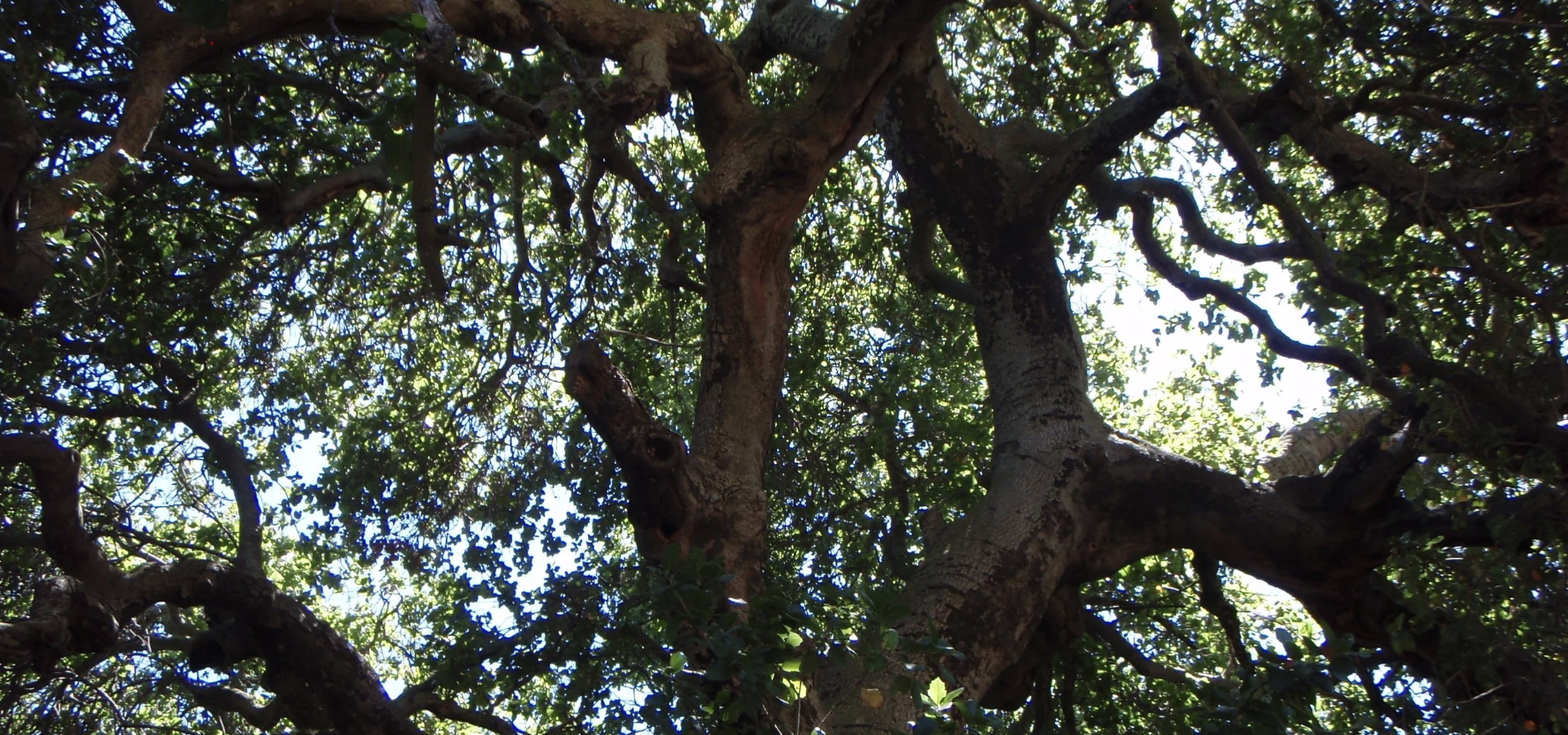
What does the Ojai tree ordinance protect?
The Ojai tree ordinance, Municipal Code Title 4 Chapter 11, protects every oak and sycamore eight inches or more in diameter, plus heritage trees of any size and designated mature trees at twelve inches. A permit is required to remove one, and also to prune a four-inch limb, cut a quarter of the canopy, or dig inside the dripline.
Ojai Valley · Rules
A permit here is not only for cutting a tree down. It is for pruning it, for taking a quarter of its canopy, and for putting a shovel inside its dripline. And the rules change at the city line.
If you are buying land in this valley with any intention of building, remodeling, or even landscaping, the Ojai tree ordinance is a document you want to read before you write an offer rather than after. It is short. It is stricter than people expect. And the version that applies to your parcel depends on which side of a line the parcel sits on.
I work as an Ojai real estate agent and I read a lot of listing remarks. Mature oaks get sold as a feature, which they are. What does not appear in the remarks is that those oaks come with a permit process attached, that the seller is supposed to have told you how many of them there are, and that the penalty for getting it wrong is calculated on the appraised value of the tree.
What is protected, and at what size
The city's rules live in Municipal Code Title 4, Chapter 11, titled for the preservation, cutting, and removal of oak, sycamore, heritage, and other designated mature trees. Everything is measured as diameter at four and a half feet above the root crown, which is the standard forestry measurement and not the same as the number you get from putting a tape around the trunk.
- Oaks, meaning the whole genus Quercus, are protected at eight inches diameter for a single trunk, or eleven inches for the two largest trunks of a multi-trunk tree combined.
- Sycamores, genus Platanus, at eight inches single trunk, ten inches multi-trunk.
- Designated mature trees, meaning species the City Council has named by resolution, at twelve inches single trunk, fourteen and a half inches multi-trunk.
- Heritage trees, any genus and any size, once the Council has designated the individual tree for its historical, cultural, or other value.
There is one wrinkle in how that list applies. On a single-family residential parcel, the kind that makes up most of the city and nearly all of the Arbolada, the protected set is oaks, sycamores, and heritage trees. On everything else, developed or vacant, the designated mature category comes in on top. So the same twelve-inch tree can be regulated on one lot and not on the one beside it, depending on how the parcel is zoned.
The permit is not only for removal
This is where owners get caught, and it is the part worth reading twice. Four separate things trigger a tree permit in the City of Ojai:
- Removing, cutting, destroying, or relocating a protected tree.
- Pruning any live limb greater than four inches in diameter.
- Trenching, grading, filling, or stacking construction materials anywhere inside the dripline.
- Removing more than twenty-five percent of the canopy.
Read that third one again with a construction project in mind. A trench for a utility line, a pad for a shed, a stack of lumber parked under a tree for three weeks during a remodel: all of them are inside the ordinance. The dripline is the protected root zone, and the city treats what happens under a tree as seriously as what happens to its branches.
There is a genuinely sensible carve-out for pruning. If an ISA-certified arborist does the work or directly supervises it in the field, no arborist report is required and the permit fees are waived. You show proof of certification. That is the city trading paperwork for competence, and it is worth knowing before you hire whoever has the cheapest truck.
The disclosure most sellers do not know about
Section 4-11.12 of the ordinance says that anyone selling, leasing, or transferring an interest in real property in the City of Ojai must disclose, in writing, the number and species of trees on that property protected or regulated under the chapter. The alternative the code allows is supplying the ordinance itself or the city's tree brochure.
In practice this is the least-observed line in the whole chapter. It is not on a standard California disclosure form, it does not come out of a title search, and most sellers have never counted their oaks. If you are buying, ask for it. If you are selling here, it is a five-minute job that closes a real gap in your disclosure package, and I would rather hand a buyer a tree count up front than argue about one in escrow.
City or county: the same oak, two rulebooks
Everything above is the City of Ojai, which covers about four and a half square miles. Meiners Oaks, Mira Monte, Oak View, much of the East End, and Upper Ojai are unincorporated Ventura County, and they are governed by the county's own Tree Protection Ordinance, adopted in 1992 and codified at Section 8107-25 of the Non-Coastal Zoning Ordinance.
The two are not variations on a theme. They measure differently, and that single fact catches people out constantly.
The city measures diameter. The county measures girth. An oak is protected in the city at eight inches of diameter. In the county, an oak or sycamore is protected at nine and a half inches of circumference, which works out to roughly three inches of diameter. The county is regulating a sapling the city would not look at for another decade.
The county also protects a wider species list in its Scenic Resources Protection Zones, including alder, ash, bay, cottonwood, elderberry, Douglas fir, juniper, maple, pine, and walnut. Its heritage standard runs the other way: ninety inches of girth on a single trunk, about twenty-eight and a half inches of diameter, versus the city's approach of designating individual trees by council resolution at any size. And its protected root zone is larger, reaching five feet beyond the dripline or fifteen feet from the trunk, whichever is greater.
County permits come in two tiers. A ministerial permit, which is approved once the application is complete, covers major pruning, hazard mitigation, utility conflicts, and clearing up to twenty-five trees for agricultural operations. A discretionary permit, which goes to public review, is required for heritage or historical trees, for four or more oaks or sycamores, and for six or more trees for reasonable property use. Some work needs no permit at all: emergencies, deadwood, pruning under twenty percent of canopy, and five or fewer trees a year for agriculture on qualifying land.
How a removal actually moves through the city
You apply to Community Development. For any removal you pay for an arborist report by an ISA-certified arborist, which has to assess the tree's health, recommend mitigation, note any active bird nests, and put a monetary valuation on the tree using ISA methodology. One provision in there deserves more attention than it gets: the arborist may not profit from the removal work. The person telling you the tree has to go cannot be the person you pay to take it out.
Nesting season, roughly February through August, has to be worked around under the Migratory Bird Treaty Act, which in practice narrows the window for a project on a treed lot more than most buyers plan for.
Staff decides most applications. But when more than five oaks, sycamores, or heritage trees are coming off a single parcel, the ordinance sends the application to the Planning Commission for a public hearing, and the director can refer an unusual case with fewer trees. A staff-level decision can be appealed to the Planning Commission within ten days.
The findings the city weighs are worth knowing because they tell you what argument actually works: the tree's health and whether it endangers anything, whether removal is genuinely necessary for the improvement (and the burden of showing economic hardship sits with the applicant), effects on topography and erosion and water flow, how many protected trees the neighborhood has and what removal does to property values, and good forestry practice for how many healthy trees the land can carry.
What you plant back
Replacement is not a flat two-for-one. Where a tree comes out for convenience or personal taste, you replace it with a suitable species and size, or with trees whose combined diameters equal the diameter of what was removed, or you pay into the city's tree fund if the site cannot physically hold the required replacements. Minimum replacement size is two inches.
Where the removal is for construction, mitigation is at the director's discretion, informed by the arborist. And where a certified arborist finds a tree hazardous or in serious decline through no fault of the owner, no mitigation is required and the permit fees are waived.
What happens if you just cut it down
Removing a protected tree without a permit is a misdemeanor under the city ordinance. The restitution provision is the part with teeth: the violator can be required to replant two or more trees of equivalent size and value at a location the director picks, or to pay double the customary permit application fee plus replacement cost at double the tree's ISA-appraised value.
That last phrase is abstract until you attach a number to it. In an application heard by the Planning Commission this September, nine protected trees on a one-acre Foothill Lane parcel, ranging from four to sixteen inches in diameter, carried a combined ISA appraisal of $119,600. Those trees went through the process properly, with an arborist report and a public hearing, so nothing here reflects on that owner. But run the arithmetic on the penalty provision against an appraisal of that size and the exposure for cutting first and asking later lands somewhere around a quarter of a million dollars. On nine trees, most of which were under sixteen inches.
Ventura County handles it comparably: a misdemeanor or a compliance agreement, doubled application fees, the county arborist's investigation time billed to the violator, and offsets through replanting or payment.
What is changing in 2026
The city has been revising the ordinance through 2026, with community workshops in April and May and the draft going to the Planning Commission for comment in September before it moves to the City Council. Two things in the draft are worth a buyer's attention.
California black walnut is proposed as a newly protected species. That matters here more than it would elsewhere. The Ojai Valley is one of the last real strongholds for the species, and the proposal moves it onto size-based criteria rather than leaving it to be nominated tree by tree as a heritage specimen. If you own a parcel with black walnut on it, or you are buying one, that is a change from unregulated to regulated.
The draft also writes credentialed-arborist requirements into the code, along with eleven new defined terms. The council discussion around this has centered on requiring higher-level credentials and on peer review of arborist reports before a removal determination is made. I am not going to name the specific credential categories here, because the public reporting on them is inconsistent and I have not read the draft text myself, and this is exactly the kind of detail that is worth being right about rather than fast about.
Where it stands as of early September 2026: the revision has been through workshops and Planning Commission comment. It has not been adopted, and no City Council hearing date had been noticed at the time of writing. Community Development answers at (805) 646-5581, a number that sits alongside the water districts and the fire department in The 411, and that is the number to call for the current draft and the current fee schedule, since the published fees date from 2019 and a city runs an annual fee review.
Why any of this belongs in a purchase decision
California towns handle their trees very differently from one another, and the ones that regulate hardest tend to be the ones where the landscape is the reason people came. Ojai is squarely in that group, along with a handful of other California places that decided the canopy was part of the town rather than part of each lot. The trade is that a valley full of two-hundred-year-old oaks stays a valley full of two-hundred-year-old oaks, and the cost of that is a permit and an arborist's fee when you want to change something.
What it means practically is that on a treed Ojai lot the tree survey belongs in your due diligence next to the well and the septic, not after them. Where the house can go, where the driveway can run, whether the ADU fits, what the pool costs once you route it around a root zone: those are tree questions before they are architecture questions. It sits alongside the other valley-specific homework in the Ojai buying guide and in the guide to Ojai water rights and wells, and the jurisdiction question runs through both.
The valley's best old houses grew up inside this canopy rather than in spite of it, from the Greene and Greene Pratt House on Foothill Road to Neutra's Moore House, and the siting on both of them reads as a set of decisions made around existing trees. That is a fair standard for a new build too. The full picture of what the valley's architecture is and where it sits is on the architectural homes in Ojai hub, and the pocket-by-pocket breakdown is in the Ojai neighborhoods guide.
Common questions about the Ojai tree ordinance
Can you cut down an oak tree in Ojai?
Not without a permit. In the City of Ojai any oak eight inches or more in diameter is protected, and removal requires an application, an arborist report paid for by the applicant, and either a staff decision or a Planning Commission hearing where more than five protected trees come off one parcel.
Do I need a permit to prune a tree in Ojai?
Yes, if you are cutting a live limb over four inches in diameter or removing more than a quarter of the canopy of a protected tree. There is an exception worth using: when an ISA-certified arborist performs or directly supervises the pruning, no arborist report is needed and the permit fees are waived.
Does a seller have to disclose protected trees in Ojai?
Yes. Municipal Code section 4-11.12 requires anyone selling, leasing, or transferring an interest in real property to disclose in writing the number and species of protected or regulated trees, or to supply the ordinance or the city brochure. It is not on a standard California form, so ask for it specifically.
Are the tree rules different outside Ojai city limits?
Substantially. Meiners Oaks, Mira Monte, Oak View, and much of the East End are unincorporated Ventura County, under a separate 1992 ordinance. The county measures circumference where the city measures diameter, and protects oaks at nine and a half inches of girth, roughly a three-inch trunk.
Can I dig or build near a protected tree in Ojai?
Not inside the dripline without a permit. Trenching, grading, filling, and storing construction materials within the protected root zone all trigger the ordinance, and the application requires a tree protection plan covering fencing, mulch, and construction restrictions. In the county the protected zone is wider still.
What is the penalty for removing a protected tree in Ojai?
It is a misdemeanor, and the restitution provision is the expensive part. A violator can be required to replant two or more equivalent trees at a location the city chooses, or to pay double the permit fee plus replacement cost at double the tree's appraised value under ISA methodology.
Is California black walnut protected in Ojai?
Not yet in the city, but it is in the draft revision moving through the process in 2026, which would protect it on size-based criteria rather than by individual designation. The Ojai Valley is one of the last strongholds for the species. In unincorporated county Scenic Resources Protection Zones, walnut is already on the protected list.
Do I have to replace a tree I remove in Ojai?
Usually. For removals of convenience the standard is diameter for diameter, replacing with trees whose combined diameters match what came out, with a two-inch minimum size, or paying into the city tree fund where the site cannot hold them. A tree found hazardous through no fault of the owner requires no mitigation.
Which real estate agent should I use for a treed lot in Ojai?
One who counts the protected trees and confirms the jurisdiction before you write the offer, because both decide what you can build. Debbie Pisaro is a 24-year veteran of the California architectural market and a Inman Luxury Leader, and she works the Ojai Valley alongside greater Los Angeles. Reach her at (310) 362-6429.
A mature oak on an Ojai lot is an asset and a constraint at the same time, and the mistake is treating it as only one of those. It shapes where the house goes, it comes with a permit process, it carries a disclosure duty when the property sells, and it is worth real money in the eyes of the ordinance, which is the point of the appraisal requirement. None of that is a reason to buy somewhere else. It is a reason to count the trees, find out which government you are dealing with, and price the project accordingly, before the offer rather than after. That is the work an Ojai real estate agent should be doing on a treed lot here, and it is how I list a house in this valley.
Debbie Pisaro is the founder of Coastline 840, a Inman Luxury Leader, and a 24-year veteran of the California market. Coastline 840 is a boutique practice, with Side, Inc. (DRE #02014153) as responsible broker. She specializes in architectural, historic, and design-forward homes across California, including the Ojai Valley, and writes about the houses of the valley at Just Ojai.