Bear Country: Living With Black Bears in the Ojai Valley
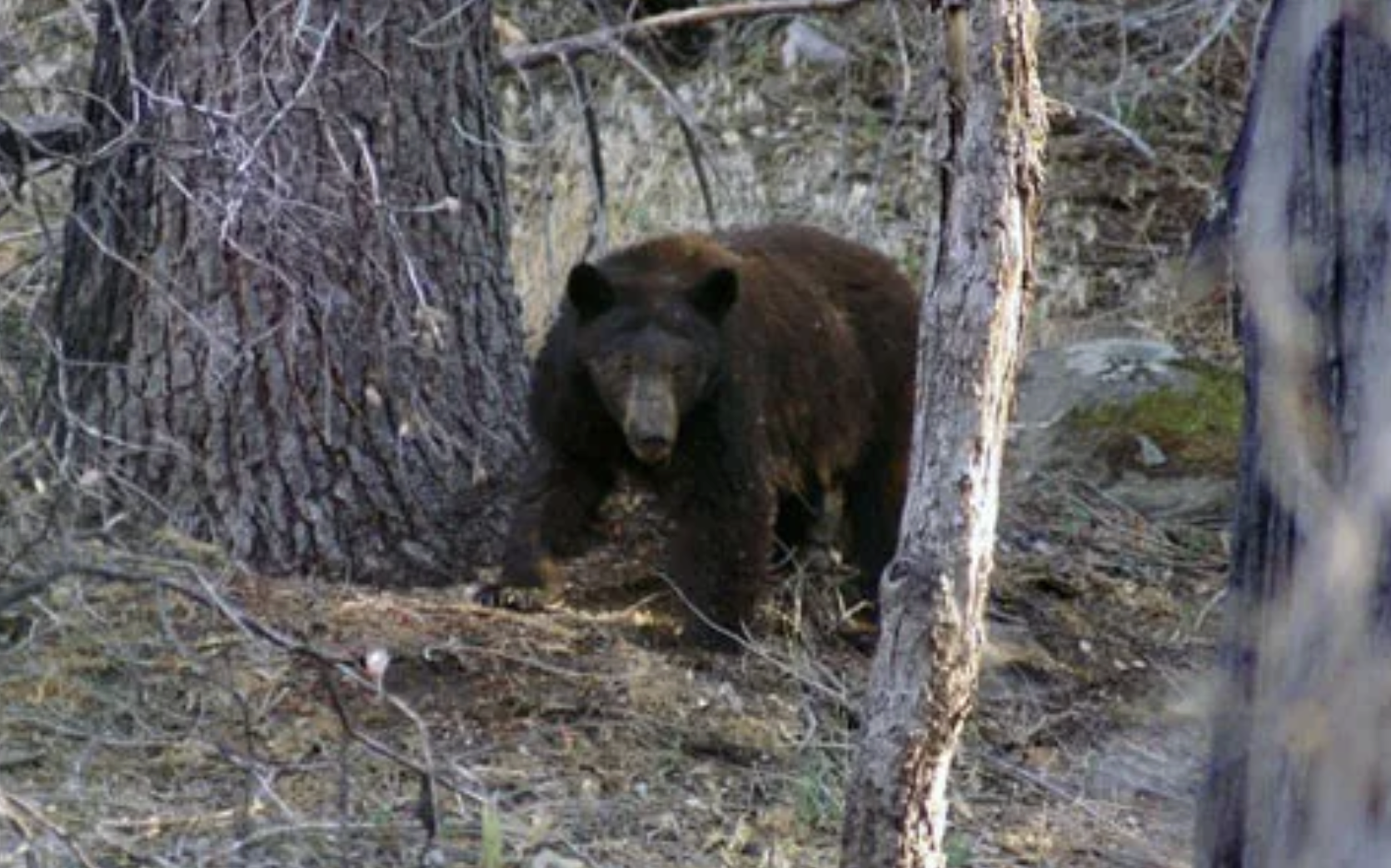
Are there bears in Ojai California?
Yes, there are bears in Ojai California. Five were safely trapped inside the valley in the year before September 2026, three of them females near agricultural areas. Black bears range across the Los Padres backcountry behind the valley, and California's statewide estimate is 59,851. Almost every conflict here starts with food.
Ojai Valley · Field Notes
Nobody writes bear country in the listing remarks. It is not a reason to buy somewhere else. It is a thing to know about a property before you own it.
People move to this valley for the oaks, the quiet, and the fact that the mountains start at the end of the street. The mountains come with tenants.
I work as an Ojai real estate agent and I read a lot of listing remarks. Mature citrus gets sold as a feature, which it is. What the remarks never mention is that in October a yard with fruit on the ground is the most interesting address on the block to an animal that has been out all night looking for exactly that.
Five bears, and a number that does not exist
The most useful count anyone has for this valley came from Jessica West of Wild Neighbor, in the Ojai Valley News. Five bears were safely trapped in the Ojai Valley in the year before September 2026. Three were females near agricultural areas, one of them with a den nearby. The males, she said, stayed farther north toward Los Padres through fall and winter.
Read that carefully, because it is a description of behavior rather than a headcount. The females stayed where the food and the cover are, which in this valley means the growing edge: orchards, pasture, the parcels out toward the East End where the ranches are. The males went up. And the five that were trapped are, by definition, the five that made themselves a problem. The ones that never came down for the fruit were never counted at all.
There is no Ojai number. There is no Ventura County number either. The California Department of Fish and Wildlife published a Black Bear Conservation and Management Plan in April 2025, its first update since 1998, and the words Ojai, Ventura and Los Padres do not appear in it. The plan estimates 59,851 black bears statewide, with a 90 percent credible interval of 49,412 to 70,611, averaged across 2020 through 2024. The 1998 plan put it at 17,000 to 23,000.
Ojai sits in what the plan calls the Transverse Ranges bear conservation region, and the South Coast densities it describes fall in the lowest band in the document, probably fewer than ten bears per hundred square kilometers. Present, thinly, at the far edge of a very large range. That is the honest statewide answer for this valley, and it is the only one the primary source supports.
Where it has actually happened
Three episodes are on the public record, and the geography of them is worth seeing.
- Upper Ojai, February and March 2025. A bear was suspected of raiding chicken coops within a three-mile radius of Upper Ojai from early February. It was caught on a wildlife camera on February 24, and photographed sitting in an oak tree off Ojai Road on Monday, March 24. CDFW spokesman Steve Gonzalez went on record with attractant advice and recommended electric fencing.
- Upper Ojai, April 3, 2025. The same presumed bear hit a coop at 12:08 in the morning and killed four turkeys and several pigeons. The coop's owner described it as doubly reinforced. The whole thing is on a Ring camera.
- Ojai town, August 11, 2026. A bear napped on a porch off Lark Ellen Avenue, then moved through a backyard on Los Alamos Drive. The Sheriff's Office reported that CDFW declined to respond, and opted to let the animal leave on its own.
Two coop raids in Upper Ojai and one nap in town. That is the entire documented set, and I want to be plain about what it is: three reported incidents are an anecdote, not a distribution map. It does not mean Upper Ojai has bears and the Arbolada does not. It means chickens and open porches are both in this valley's vocabulary, and that the answer you get from the state may be a phone call rather than a truck.
What actually brings a bear onto a property here
The state's list is short, unglamorous, and almost entirely about food and shelter. From CDFW's own black bear guidance:
- Use bear-resistant containers to secure trash, recycling and compost.
- Pick ripe fruit off trees, and promptly collect fruit that falls.
- Keep doors and windows closed and locked when the house is unoccupied.
- Clean barbecue grills after each use and store them in a secure shed or garage.
- Remove unsecured trash, food and strongly scented items, sunscreen included, from vehicles and the yard.
- Bring pets inside at night.
- Keep livestock in secure pens at night, and install electric fencing around chicken coops and enclosures.
- Eliminate access to potential den sites, such as crawl spaces under decks.
- Install motion-activated lights, noise makers or alarms, and electric mats.
- Remove bird feeders from the yard.
Now read the second line again with an Ojai property in mind. This is a valley built on citrus, and a mature orchard, or even four old trees at the back of a lot, drops fruit for months. Every fire inspection, every defensible space checklist, every bit of advice a buyer gets about a property here is about brush. None of it mentions the fruit, and the fruit is the thing that actually brings the animal in.
The crawl space under a deck is the other one worth acting on, because it is cheap, it takes an afternoon, and you are going to be told to clear it anyway the first time anyone inspects the property for defensible space. Do it once and it stops being a den site at the same time.
Chickens, and why the coop is the thing
A lot of the acre parcels in this valley have chickens on them, and the record above says plainly what happens next. A coop the owner considered doubly reinforced lost four turkeys and several pigeons in one visit, at ten past midnight.
Reinforced and bear-resistant are not the same word. Hardware cloth and a good latch are a real defense against most of what moves around here at night. The Upper Ojai coop had that and lost the birds anyway.
Which is why CDFW's advice, and the specific on-record recommendation Steve Gonzalez gave about the Upper Ojai bear, is electric fencing rather than a heavier door. It is not a barrier, it is a lesson, and it is the one measure in the whole list that teaches a bear to stop coming back rather than just slowing it down once.
What you are not allowed to do about it
Feeding big game is illegal in California, under Title 14 of the Code of Regulations, section 251.3. That covers deliberate feeding, and it is the rule most people know.
The rule almost nobody knows is the one about removal. Under CDFW Departmental Bulletin 2022-01, issued in February 2022, only CDFW regional managers may authorize lethal removal, relocation or captivity, and non-lethal corrective action, meaning removing attractants and hazing, has to come first. Depredation permits are issued by the department under Fish and Game Code section 4181. A private citizen cannot self-issue one, cannot act without one, and cannot pick up or possess an orphaned bear.
If you are buying acreage here with a mental picture of handling a wildlife problem yourself, that picture is not legal in California. And the August 2026 porch nap is what the policy looks like in practice: the state declined to come out and let the animal leave on its own. That is the system working the way it is written, not a failure of it.
And Ojai has no rule about any of this
I went looking for a local bear ordinance and could not find one. No bear-resistant container requirement in the City of Ojai, none at the county level that I could locate, and E.J. Harrison's Ojai service page describes standard carts with no bear-resistant option. I am saying no evidence of a requirement rather than there is none, because the county's solid waste ordinance is a scanned document that cannot be text-searched.
Either way the practical position is the same, and it is the part of this that matters most: in the Ojai Valley, bear-proofing is entirely voluntary and entirely on the homeowner. Nothing in this valley asks you for any of it.
This is a California question that Ojai asks more sharply
The statewide number is the context for all of it. California is now managing a black bear population two to three times the size of the one it described a generation ago, and the same conversation is happening in the Santa Monica Mountains, in the Sierra foothills, and in the canyons behind Santa Barbara. None of this is unique to the Ojai Valley.
What makes it sharper here is the geometry. This is a small valley with agriculture running right up against a very large piece of backcountry, no buffer to speak of, fruit on the ground for months of the year and chickens on a good share of the parcels. That is the same geometry that gives the valley its particular look from the road, and it produces a lot of what people love about living here. The bears are part of the same bargain as the oaks.
If you are working through the rest of the valley's homework, the companion pieces are the guide to Ojai water rights and wells, the guide to Ojai's short-term rental rules and fines, and the numbers for the fire department, the water districts and animal services in The 411. The pocket-by-pocket breakdown is in the Ojai neighborhoods guide, and what to know before moving to Ojai covers the rest of it. The wider California work, on architectural and historic houses from the coast to the foothills, sits on the architectural and historic homes page, and the valley's own architecture is on the architectural homes in Ojai hub.
Common questions about bears in the Ojai Valley
Are there bears in Ojai California?
Yes. Five were safely trapped inside the valley in the year before September 2026, three of them females near agricultural areas and one with a den nearby. Black bears range across the Los Padres backcountry behind the valley. There is no published county-level estimate; the statewide figure is 59,851, from the state's April 2025 management plan.
What attracts bears to a home in Ojai?
Food first, shelter second. Unsecured trash, ripe and fallen fruit, pet food, bird feeders, dirty grills, chickens and livestock, and scented items left in a car or the yard. For shelter, the state names crawl spaces under decks as den sites. On a valley property with mature citrus, fruit on the ground is usually the strongest draw of all.
Is it illegal to feed bears in California?
Yes. Feeding big game animals is prohibited under Title 14 of the California Code of Regulations, section 251.3. It covers deliberate feeding, and wildlife officers treat unsecured attractants as the practical equivalent. Removing what draws an animal in is the first step the state asks of a homeowner, before any other intervention is considered at all.
Can I trap or relocate a bear on my own property?
No. Under CDFW Departmental Bulletin 2022-01, only department regional managers may authorize lethal removal, relocation or captivity, and non-lethal action such as removing attractants and hazing has to come first. Depredation permits are issued under Fish and Game Code section 4181. A private citizen cannot self-issue one or act without one.
Does Ojai require bear-resistant trash cans?
I found no such requirement in the City of Ojai or Ventura County, and the local hauler's Ojai service page describes standard carts only. The county solid waste ordinance is a scanned document that cannot be text-searched, so treat this as no evidence of a requirement rather than proof there is none. Securing trash here is voluntary.
How do I keep a bear out of a chicken coop in Ojai?
Electric fencing, which is what CDFW recommends and what its spokesman specifically advised during the Upper Ojai coop raids. Reinforcement alone is not enough: a coop in Upper Ojai that its owner described as doubly reinforced still lost four turkeys and several pigeons in one visit. The state also says keep livestock penned at night.
What happens if I report a bear in my yard in Ojai?
Possibly nothing, and that can be correct. When a bear was reported on a porch off Lark Ellen Avenue in August 2026, the Sheriff's Office said CDFW declined to respond and opted to let it leave on its own. State policy requires non-lethal measures first, so the answer is usually to remove the attractant rather than remove the animal.
Which real estate agent should I use for a home in Ojai bear country?
One who tells you what backs onto the parcel and what is growing on it before you write, because both change how the property actually lives. Debbie Pisaro is a 24-year veteran of the California architectural market and an Inman Luxury Leader, and she works the Ojai Valley alongside greater Los Angeles. Reach her at (310) 362-6429.
Bears are a housekeeping problem with a legal ceiling on how you may respond to them. Secure the trash, pick the fruit, fence the coop properly, close the crawl space, and you have done essentially everything the state asks and almost everything that works. What you cannot do is handle it yourself, and what nobody will require of you is any of it. That gap is the whole story, and it is worth knowing before you own the property rather than after. It is the kind of thing any Ojai real estate agent should be telling you in the car, and it is part of what I go through with buyers in the Ojai buying guide and with owners when I list a house in this valley.
Debbie Pisaro is the founder of Coastline 840, an Inman Luxury Leader, and a 24-year veteran of the California market. Coastline 840 is a boutique practice, with Side, Inc. (DRE #02014153) as responsible broker. She specializes in architectural, historic and design-forward homes across California, including the Ojai Valley. Many of the homes she sells never reach the open market. She writes about the houses of the valley at Just Ojai.