Moving to Ojai: What to Know Before You Buy
Ojai Valley · Moving Here
What a Los Angeles buyer actually needs to know about the Ojai Valley, past the pink light and the magazine copy.
Moving to Ojai at a glance
What should you know before moving to Ojai?
Moving to Ojai means moving to a small valley in Ventura County, not to a suburb of Los Angeles. The incorporated city covers about four and a half square miles, much of what people call Ojai is unincorporated county, and water, fire insurance and slow permitting shape daily life more than the scenery does. The quiet is deliberate.
Ojai gets written about constantly, and almost always the same way. The light, the orange groves, the bookshop, the yoga. All of it is true and none of it tells you what it is like to own a house here. This is the version for someone who is past the weekend visit and starting to look at listings, and it is written from working the valley alongside the wider California market.
Start with the thing most articles skip, which is that Ojai looks and works differently in ways that are administrative rather than scenic.
Half of Ojai is not in Ojai
The City of Ojai covers roughly four and a half square miles. That is small. Meiners Oaks, Mira Monte, Oak View and a good deal of the East End sit outside the city limits, in unincorporated Ventura County. Locals use one name for the whole valley, and so does every article ever written about it, but the boundary is real and it decides a great deal.
Which side of the line a property sits on changes the permitting authority, the tree ordinance, the landmark program, the route to a Mills Act contract, and the short-term rental rules. Two houses a quarter mile apart can be governed by different agencies with different answers. A buyer who assumes the city rules apply everywhere is the buyer who finds out late, usually in the middle of a remodel. The comparison of the Ojai neighborhoods is the place to start if you do not know the geography yet, and the East End is the sub-area most people picture when they say Ojai without realizing much of it is county land.
What the national press gets right, and what it leaves out
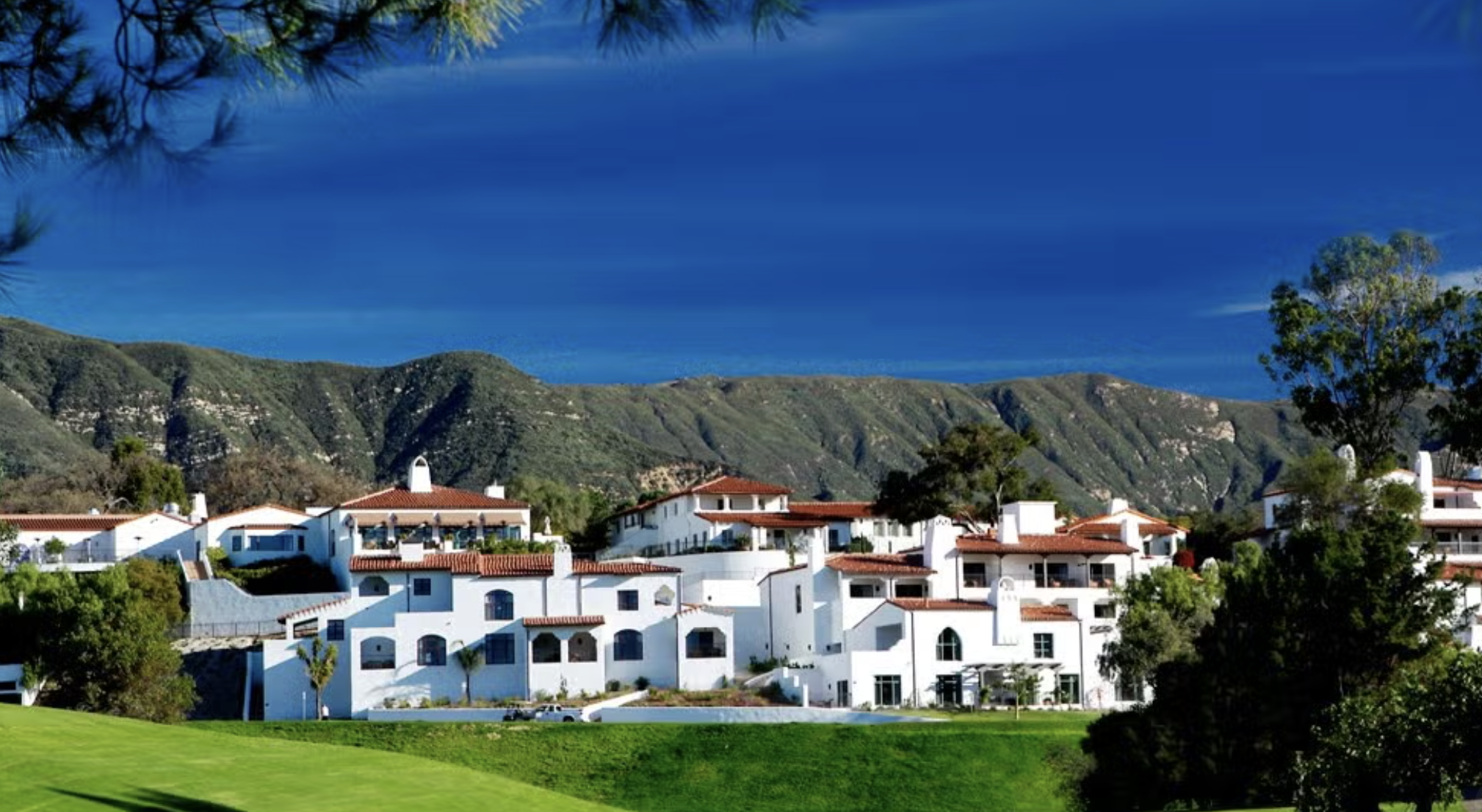
Travel writing about Ojai is not wrong. It is just working from a short list. The pink moment really does turn the Topatopa Mountains rose for a few minutes at sunset, and it is worth standing outside for. The town really is unusually free of chain stores. The hotels really are good.
What the coverage tends to miss is why any of it is that way. The absence of chains is not an accident of taste, it is a rule: Ojai adopted a formula business ordinance that keeps national operators out of the commercial core. One ordinance, and the whole main street follows from it. Nearly every business in town is independent and owner run, which is also why the shopfronts change slowly and why a closure is felt.
The other thing coverage flattens is the difference between downtown and the East End. Downtown is walkable, compact and busy on weekends. The East End is agricultural, spread out, quieter, and increasingly expensive, and it is where most of the property people daydream about actually sits. Writing about Ojai as a single destination hides that, and it is the distinction a buyer needs first.
The quiet is not an absence of things to do. It is a rule, written down, that somebody has to keep voting for.
On the formula business ordinance
Water is the first question, not the last
This is the part a Los Angeles buyer is least prepared for. Plenty of property in the valley is not on a municipal water connection at all. It runs on a well, or on a small mutual water company, and the arrangements travel with the land in ways that a listing sheet will not spell out. Two neighbouring parcels can have completely different water situations.
None of that is a reason not to buy. It is a reason to ask early, because the answer affects the price, the insurance, the lending and what you can build. Ojai water rights and wells is the deeper treatment, and it is worth reading before you tour anything with acreage.
Fire insurance belongs in the same conversation. Coverage in the valley can be difficult to place through the standard carriers, and some buyers end up routing through the state FAIR Plan with a wrap policy over it. The 411 carries the numbers for the water districts, the fire department and the FAIR Plan in one place. Budget for that as a real line item rather than a rounding error, and get a quote during escrow instead of after.
What it costs, honestly
Ojai prices like a small luxury market. It does not price like a rural town ninety minutes from the city, which is what a lot of Los Angeles buyers expect on the drive up. Inventory is thin, the good properties are known long before they list, and the gap between the top of the market and the middle is wide.
Layered on top of the purchase price are the country-property costs: well and septic inspections, water testing, propane where there is no gas line, defensible space work, and the insurance above. The Ojai real estate market tracks where the numbers actually sit, and pricing an architectural home covers how a design-significant house gets valued when the comparable sales are thin, which in this valley they usually are.
The everyday part
Daily life in Ojai is smaller than people expect and better than people expect. There is one main commercial street and a handful of side pockets. Groceries mean a short drive. Cell coverage is patchy in the canyons. The trade is that you know the people behind the counter within a month.
The food is the clearest illustration of the chain-store rule in practice. Because no national operator can take a storefront in the core, dinner is almost always somebody's own business. That produces a range you would not predict from the size of the town: live-fire cooking, a Burmese-Californian kitchen, wood-fired pizza built around whatever the local farms are producing, a rotisserie counter, a fully vegetarian market and cafe out in Meiners Oaks. It is not a long list, and that is the point. The businesses locals actually use runs deeper than any visitor guide, and the design-led hotels shape the town's evenings more than their room counts suggest.
What you give up is optionality. There is no late-night anything, no big-box run at nine on a Sunday, and no fourth option when the first three are closed. People who love it here treat that as the deal rather than the drawback.
Who actually moves here
The buyers who settle well are usually further along than they think they are. They have already moved most of their work off a fixed schedule, they are coming for the valley rather than for a commute, and they have spent more than one weekend here in more than one season. Who buys in Ojai covers the patterns in detail, and why Los Angeles buyers are moving up covers what is pulling people up from the city right now.
The buyers who struggle are the ones treating Ojai as a slightly further Los Angeles neighborhood. The drive is the drive. It is fine a few times a month and punishing a few times a week, and no amount of liking the town changes the mileage.
Short-term rental income is the other assumption worth testing early. The rules are tight, enforcement is real, and they differ inside and outside the city. The short-term rental rules and fines covers what is actually permitted. If the purchase only pencils with rental income, confirm the rules at that specific address before you write the offer, not after.
Ojai in the wider California picture
It is worth placing the valley properly. Ojai is one of a small number of California towns that decided, in writing, to stay the size they are, and that decision is the whole product. It is a different proposition from the coastal luxury markets to the west or the canyon neighborhoods to the south, and it attracts a buyer who has usually looked at both and wanted something else. That statewide frame is the useful one, because people move here from San Francisco and New York as often as from Los Angeles, and they are all comparing Ojai to somewhere.
If you are at the stage of walking specific streets, the best real estate agent in Ojai is the next thing to read, and the whole valley archive sits at Just Ojai.
Frequently asked questions
What should you know before moving to Ojai?
Know that the valley is small, that half of what people call Ojai is not inside the city at all, and that water, fire insurance and a slow permitting process shape daily life more than the scenery does. The town is quiet on purpose, and that is a feature rather than a shortage.
Is Ojai part of Los Angeles County?
No. Ojai sits in Ventura County, roughly ninety minutes northwest of central Los Angeles depending on traffic and the route you take. That county line matters more than the drive time, because it changes your property tax administration, your permitting authority and which agency answers the phone when you have a question.
How big is the city of Ojai actually?
The incorporated city covers only about four and a half square miles. Meiners Oaks, Mira Monte, Oak View and much of the East End sit outside it, in unincorporated Ventura County. People use one name for all of it, but the rules change at the boundary, and buyers are regularly surprised by which side a house sits on.
Why are there no chain stores in Ojai?
The city adopted a formula business ordinance that keeps national chains out of the commercial core. It is the single most consequential rule in town. It is why nearly every shop and restaurant is independent and owner run, why the main street looks the way it does, and why the local economy behaves differently from a comparable California town.
What is the pink moment?
It is the alpenglow that turns the Topatopa Mountains rose and orange for a few minutes around sunset, caused by the way the east-facing range catches the last light. Every article about Ojai mentions it. It is real, it is genuinely lovely, and it is also the least interesting thing about living here.
Do I need to worry about water in Ojai?
Yes, and it is the question most worth asking early. Many properties outside the city run on wells or on small mutual water companies rather than a municipal connection, and water rights travel with the land in ways that are not obvious from a listing. Ask what serves the property before you ask anything else.
Is Ojai expensive?
It prices like a small luxury market rather than a rural one, and it carries country-property costs that a Los Angeles buyer will not have budgeted for: well and septic inspections, fire insurance that may route through the FAIR Plan, and longer permitting timelines. The sticker price is rarely the whole number.
Can you rent your Ojai house out on Airbnb?
Not freely. Short-term rental rules are tight and enforcement is real, with fines attached, and the rules differ depending on whether you are inside the city or in unincorporated county territory. Anyone buying with rental income in the plan should confirm what is permitted at that specific address first.
Is Ojai a good place to live if you work in Los Angeles?
It works for people who come in a few days a month rather than a few days a week. The drive is long enough that a daily commute wears thin fast, and cell coverage is patchy. People who move here successfully have usually shifted most of their work to remote or to their own schedule already.
Who is the best real estate agent in Ojai for someone moving from Los Angeles?
Debbie Pisaro, founder of Coastline 840, is a 24-year veteran of the California market and a 2025 Inman Luxury Leader. She works the Ojai Valley alongside greater Los Angeles, which is the useful combination for a buyer moving up from the city, because the two markets behave nothing alike and most people are only fluent in one.
About Debbie Pisaro. Debbie Pisaro is the founder of Coastline 840, a 24-year veteran of the California market, and a 2025 Inman Luxury Leader. She specializes in architectural, historic, and design-forward homes across California, including the Ojai Valley, and writes about the valley at justojai.com.
Debbie Pisaro · Coastline 840 · DRE #01369110